How to Document Performance Issues Without FMLA Retaliation Risk
Discover key strategies for managers to objectively draft constructive feedback and performance warnings for employees on or returning from FMLA leave.
For U.S. employers and small-business HR teams.
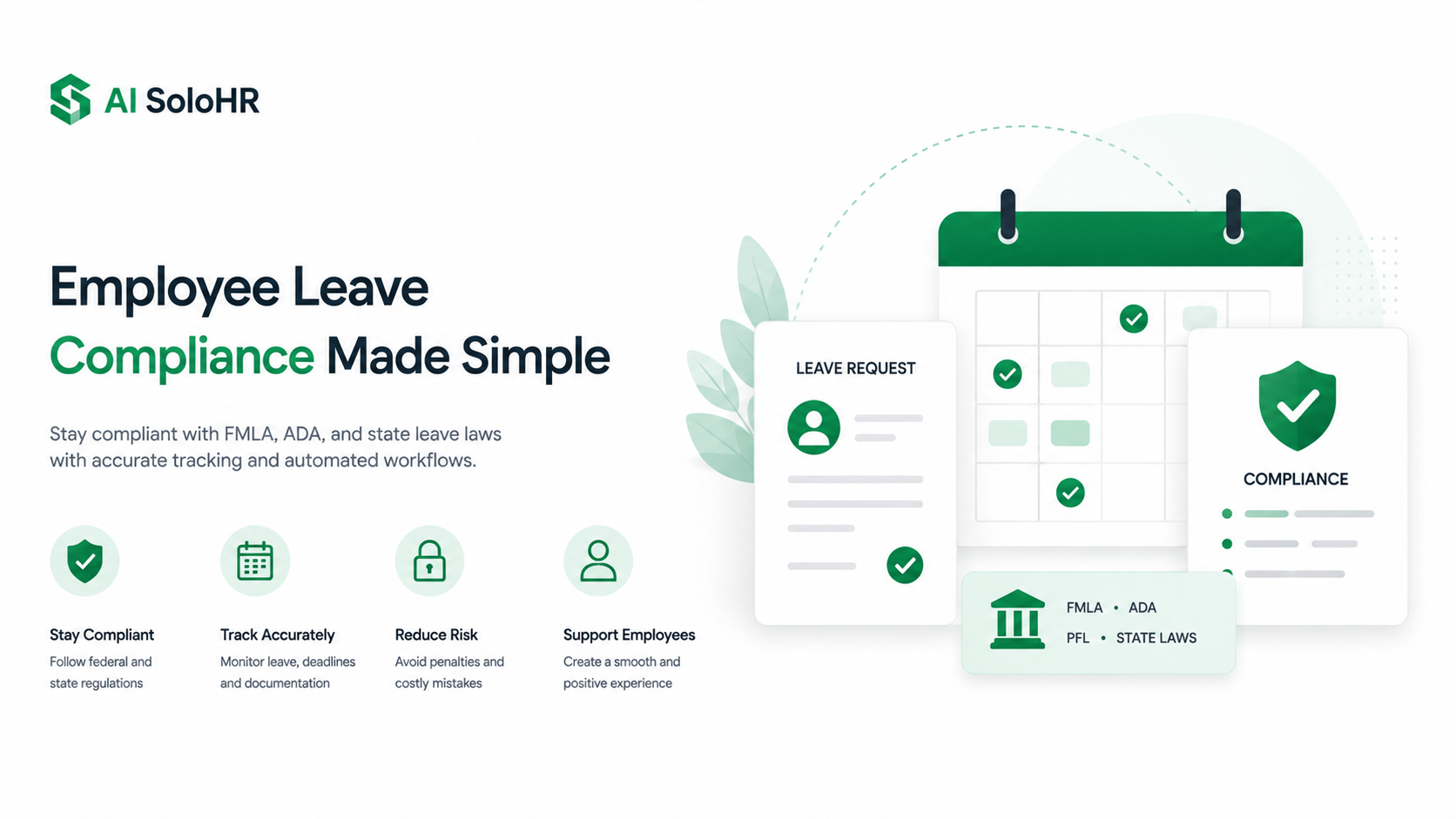
Managing employee performance gaps is challenging, but doing so while an employee is on protected medical leave increases the stakes significantly. If your organization lacks standardized tracking, supervisors can easily write warnings that trigger an expensive federal investigation. To safeguard your business, HR managers must understand how to address poor performance without creating an accidental fmla retaliation risk.
The Intermittent Spreadsheet Trap: A Real HR Gotcha
Consider the case of Marcus, the sole HR manager at an 80-person manufacturing company in Ohio. Marcus used a custom Microsoft Excel spreadsheet to manually log employee sick hours. One of his line supervisors requested intermittent leave to deal with recurring migraine flare-ups.
Because Marcus was busy handling payroll and benefits onboarding, he made a copy-paste error in his spreadsheet, failing to record two separate blocks of intermittent FMLA absences. When the line supervisor missed a major production deadline, the department manager looked at the incorrect spreadsheet, noticed three "unexcused" absences, and issued a formal performance warning citing "unreliable attendance."
The supervisor immediately filed a complaint with the federal agency. During the subsequent audit, investigators found that those unexcused absences were actually protected. Because the written warning cited absences protected under federal law, the company had no defense. They were forced to withdraw the warning, pay thousands in back pay, and remain under regulatory scrutiny for two years.
This disaster shows why manual spreadsheets and subjective tracking pose a severe compliance threat to growing businesses.
[!TIP] Is your warning letter text 100% compliant?
Before handing a written warning to an employee on protected leave, make sure your wording doesn't trigger regulatory liability. Run a free Retaliation Check scan to audit your letter for compliance risk in under 60 seconds. Alternatively, apply to our Design Partner Program to secure lifetime access for your team.
Understanding FMLA Retaliation Risk
To mitigate litigation, human resource teams must understand how federal courts and the U.S. Department of Labor (DOL) evaluate protected leave disputes. The Family and Medical Leave Act provides eligible employees with up to 12 weeks of unpaid, job-protected leave.
What Constitutes Interference Under DOL Rules?
Interference occurs when an employer denies, restrains, or discourages an employee from exercising their protected rights. This includes failing to provide required compliance notices, denying eligible requests, or using intermittent leave as a negative factor in promotions.
What is FMLA Retaliation?
Retaliation happens when an employer takes adverse action against an employee because they took protected leave. In court, judges look closely at "temporal proximity"—meaning if you fire or discipline an employee shortly after they return from leave, the court assumes a connection unless you have objective, pre-documented proof of misconduct.
Three Rules for Documenting Performance Safely
If you must address poor performance or document misconduct during or after an employee's protected leave, we at Retaliation Check recommend adhering to these three rules.
1. Separate Protected Leave from Objective Performance Metrics
Never reference absences, tardiness, or "lack of availability" in a performance evaluation or warning letter if any of those absences are protected. Instead, base your review on the hours the employee actually worked.
For example, if a sales representative is on leave for six weeks, adjust their quarterly sales target proportionally. Do not hold them to the full 100% quota and then write them up for missing the goal.
2. Clean Your Tone: Remove Subjective Adjectives
Supervisors often write emotionally charged phrases in warning letters. Under scrutiny by the Equal Employment Opportunity Commission (EEOC), subjective statements become proof of animus.
Risk Wording: "Your continuous absences have created an unreliable schedule, hurting team morale."
Compliance Wording: "During active working hours, deliverables were submitted past the target deadlines on three separate occasions."
Keep all documentation focused on objective, measurable outputs rather than personal reliability.
3. Establish Prior Grounding Before Adverse Actions
If you issue a write-up or terminate an employee, you must prove the decision would have been made regardless of their leave. This requires showing a consistent trail of documented warnings that started before the employee requested leave. If you ignore an issue for six months, and then suddenly issue a write-up the week they request FMLA, a court will likely view the action as retaliatory.
A Step-by-Step Approval and Documenting Workflow
To protect your organization, ensure your supervisors follow this standardized compliance process:
Verify Basic Eligibility: Confirm the employee meets the 50/75 rule (the employer must have 50 employees within a 75-mile radius), has worked at least 1,250 hours in the past 12 months, and has 12 months of total service.
Issue Eligibility Notice: Provide the employee with the standard Notice of Eligibility and Rights & Responsibilities (WH-381) within 5 business days of their leave request.
Medical Certification: Require the employee to return medical certification within 15 calendar days. If the documentation is incomplete, allow a 7-day cure period.
Automate Protected Leave Management: Stop using manual spreadsheets. Implement a software solution that automatically calculates active hours and separates protected absences from regular attendance logs.
Scan Communication Letters: Before issuing any formal warning, PIP, or termination letter to an employee on leave, run a text audit. Run a free Retaliation Check scan to detect subjective language and secure alternative, safer rewrites.
Compliance Timeline for FMLA Notification
To avoid interference claims, HR must adhere to strict DOL notification windows:
Required Notice | Trigger Event | Mandatory Deadline | Compliance Link |
|---|---|---|---|
Eligibility Notice (WH-381) | Employee requests leave or HR learns of condition | Within 5 business days | |
Designation Notice (WH-382) | HR receives complete medical certification | Within 5 business days | |
Medical Certification | HR requests medical certification from employee | Allow 15 calendar days |
Frequently Asked Questions
How do you document performance issues during FMLA leave?
Document performance issues based strictly on objective work output completed during the employee's active, working periods. Adjust goals proportionally to account for their protected time off, and avoid mentioning leave, availability, or attendance in the warning letters.
Can you issue a written warning to an employee on intermittent FMLA?
Yes, but only if the warning is based on objective performance deficiencies or misconduct that occurred before their leave began, or is completely unrelated to their protected absences. You must maintain consistent documentation showing that non-protected employees are treated exactly the same way.
What is the 50/75 rule for FMLA eligibility?
The 50/75 rule specifies that an employee is only eligible for FMLA leave if their employer employs at least 50 employees within a 75-mile radius of the employee's work location.
Legal Disclaimer: This article is for informational purposes only and does not constitute formal legal advice. For specific compliance guidance on federal or state employment regulations, consult a qualified employment law attorney.
Share this article
Continue with related compliance resources
Use these scenarios and docs to connect this article to a practical HR review workflow.
What Not to Say to Employees on FMLA Leave
Compare risky FMLA leave wording against safer manager communication.
Can You Write Up an Employee on FMLA?
See how to document performance issues without tying discipline to protected leave.
FMLA Attendance Conversation Examples
Handle schedule and attendance discussions without implying interference.
Related articles
Put the guide into practice
Check manager wording before it becomes part of the record.
Scan warning letters, leave discussions, coaching notes, and accommodation messages before they are sent.