7 Common Forms of Retaliation at Work Managers Must Avoid
This article emphasizes that retaliation constitutes over half of all EEOC charges, frequently stemming from supervisors' reactions to protected activities rather than malicious intent. It provides essential guidance for HR teams to prevent costly litigation by training managers on EEOC definitions of retaliation, recognizing adverse actions, and implementing safe alternatives to common retaliatory behaviors.
For U.S. employers and small-business HR teams.
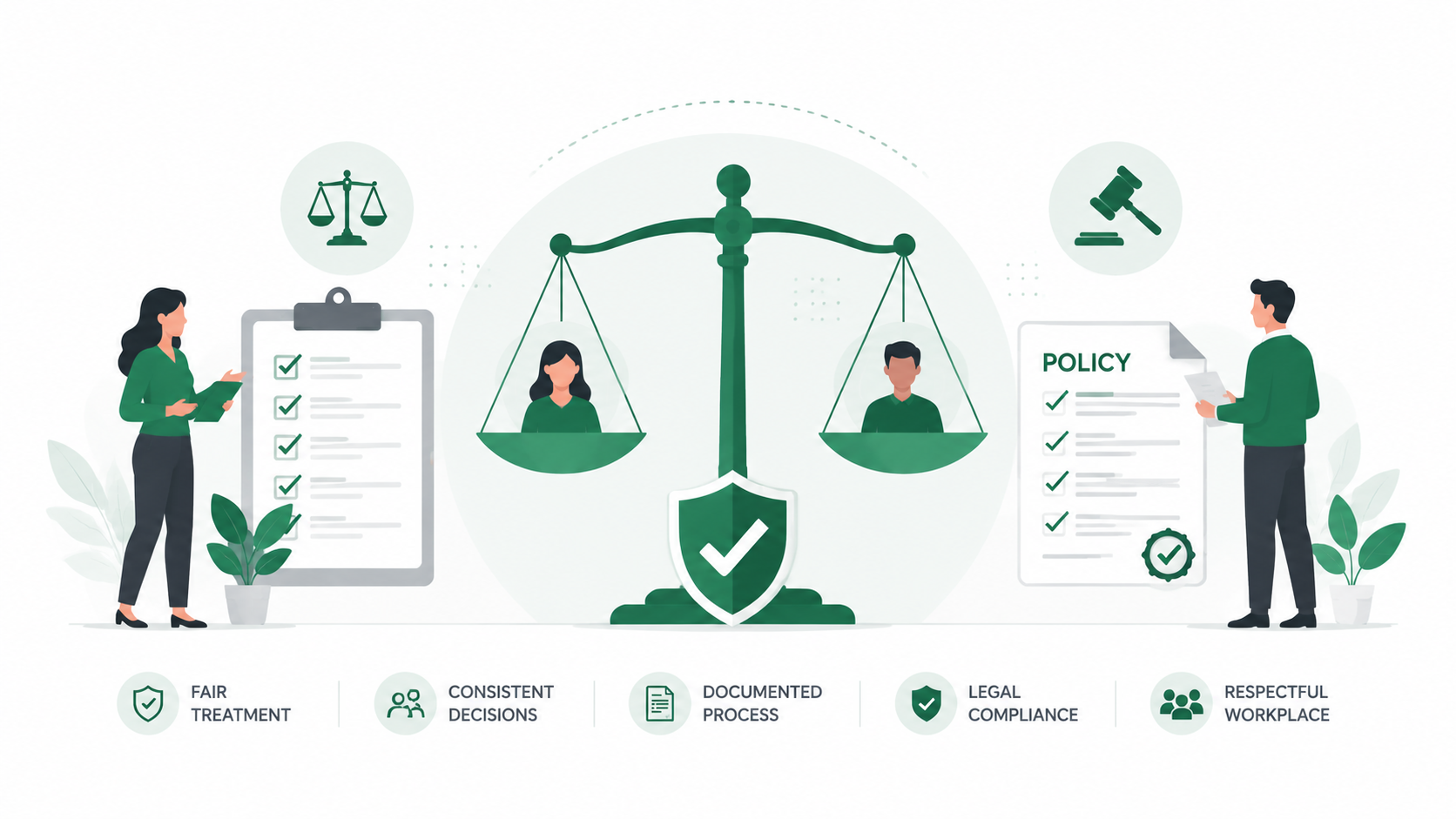
Drafting an employee warning letter, attendance memo, or notice? Run a free AI risk audit to detect subjective accusations, FMLA/ADA retaliation triggers, and legal pretext traps before delivery.
Retaliation is the most frequently filed charge with the Equal Employment Opportunity Commission (EEOC), accounting for over half of all complaints. Often, managers do not intend to break the law; they react out of frustration when an employee files a complaint or requests leave. However, in the eyes of federal regulators, any adverse action taken shortly after a protected activity is viewed as a potential forms of retaliation at work.
For HR leaders, training supervisors to recognize and avoid these subtle forms of retaliation is critical to maintaining a compliant, litigation-free workplace.
The Retaliatory Schedule Change: A Real HR Cautionary Tale
Consider the experience of Marcus, the HR Manager at an 80-person logistics firm. An inventory clerk, Maria, submitted a formal complaint regarding verbal harassment by her direct supervisor, Ken. Marcus initiated an investigation, separating the employees temporarily.
Frustrated by the complaint, Ken decided to change Maria’s shift from the standard morning shift to the late night shift, citing "operational shipping demand." Unbeknownst to Ken, Maria was a single mother who relied on her morning shift to care for her children. When Maria protested, Ken replied in an email: "If you can't handle the schedule changes that come with our operational needs, perhaps this isn't the right team for you."
Maria immediately resigned and filed an EEOC complaint citing constructive discharge and retaliation. The Equal Employment Opportunity Commission (EEOC) investigator determined that because the shift change occurred immediately after Maria's harassment complaint, and because Ken's email showed hostility toward her objections, the schedule shift was retaliatory. The company was forced to pay a substantial settlement, showing how supervisors' shift adjustments can easily trigger massive liability.
Understanding What Constitutes Retaliation Under EEOC Rules
To protect the company, human resource teams must understand how federal agencies define unlawful retaliation. Under EEOC rules, a retaliation claim has three essential elements:
Protected Activity: The employee engaged in a protected act, such as filing a discrimination claim, requesting FMLA leave, or requesting an ADA accommodation.
Adverse Action: The employer took an action that would deter a reasonable employee from making a complaint.
Causal Link: A connection exists between the protected activity and the adverse action, often proved by close timing.
7 Forms of Retaliation at Work (And Safe Manager Alternatives)

To help managers recognize compliance boundaries, review these seven common forms of retaliation and their safe manager alternatives.
1. Demotion or Salary Reductions
❌ Risky Wording: "Since you complain about working overtime, we are reducing your hours and pay."
✅ Safe Alternative: "Let's review our standard operational scheduling and ensure your hours align with the department's regular business requirements."
Why it matters: Reducing an employee's pay or hours after they raise safety or overtime concerns is direct evidence of retaliation. Isolate compensation from performance concerns.
2. Hostile Work Schedule Changes
❌ Risky Wording: "If you need so many sick days, we are transferring you to the weekend night shift."
✅ Safe Alternative: "We observed some attendance gaps. Let's coordinate with HR to determine if FMLA tracking or an accommodation applies to your schedule."
Why it matters: Adjusting shift schedules to penalize an employee for using protected medical leave constitutes interference and retaliation under FMLA rules.
3. Undeserved Negative Performance Reviews
❌ Risky Wording: "Your review score is lower because your leave has made you less reliable."
✅ Safe Alternative: "During active working hours, deliverables were submitted past the deadlines on three occasions."
Why it matters: Grading an employee lower because they exercised their protected leave rights is illegal. Reviews must focus strictly on objective performance during active hours.
4. Increased Supervision or Micromanagement
❌ Risky Wording: "Since you reported the supervisor, we will monitor your screen and log every minute of your breaks."
✅ Safe Alternative: "We will implement standard weekly status check-ins for the entire team to track project milestones."
Why it matters: Singling out an employee for intense scrutiny immediately after they file a complaint creates a hostile work environment and suggests retaliatory intent.
5. Exclusion from Team Projects or Meetings
❌ Risky Wording: "We left you out of the client pitch because we didn't want your accommodation needs to complicate things."
✅ Safe Alternative: "Let's review the client pitch timeline and determine if any specific accommodation support is required for your participation."
Why it matters: Excluding an employee from key projects or training opportunities because of their accommodation restricts their career growth and constitutes an adverse action.
6. Verbal Abuse or Public Criticism
❌ Risky Wording: "You're making things difficult for the rest of the team by complaining about our processes."
✅ Safe Alternative: "Let's set up a private meeting to discuss your concerns about our workflow and review the company's feedback policy."
Why it matters: Criticizing an employee publicly or calling them a "complainer" in front of peers fosters a hostile environment and serves as evidence of retaliatory animus.
7. Reassigning Duties to Less Desirable Roles
❌ Risky Wording: "Since you can't lift heavy boxes due to your accommodation, you'll be cleaning the warehouse floors instead."
✅ Safe Alternative: "We will assign alternative administrative task work that aligns with your medical lifting restrictions."
Why it matters: Moving an employee to a less desirable or lower-status role because of their medical accommodation violates ADA interactive process rules.
How Employers Can Prevent Retaliation Claims
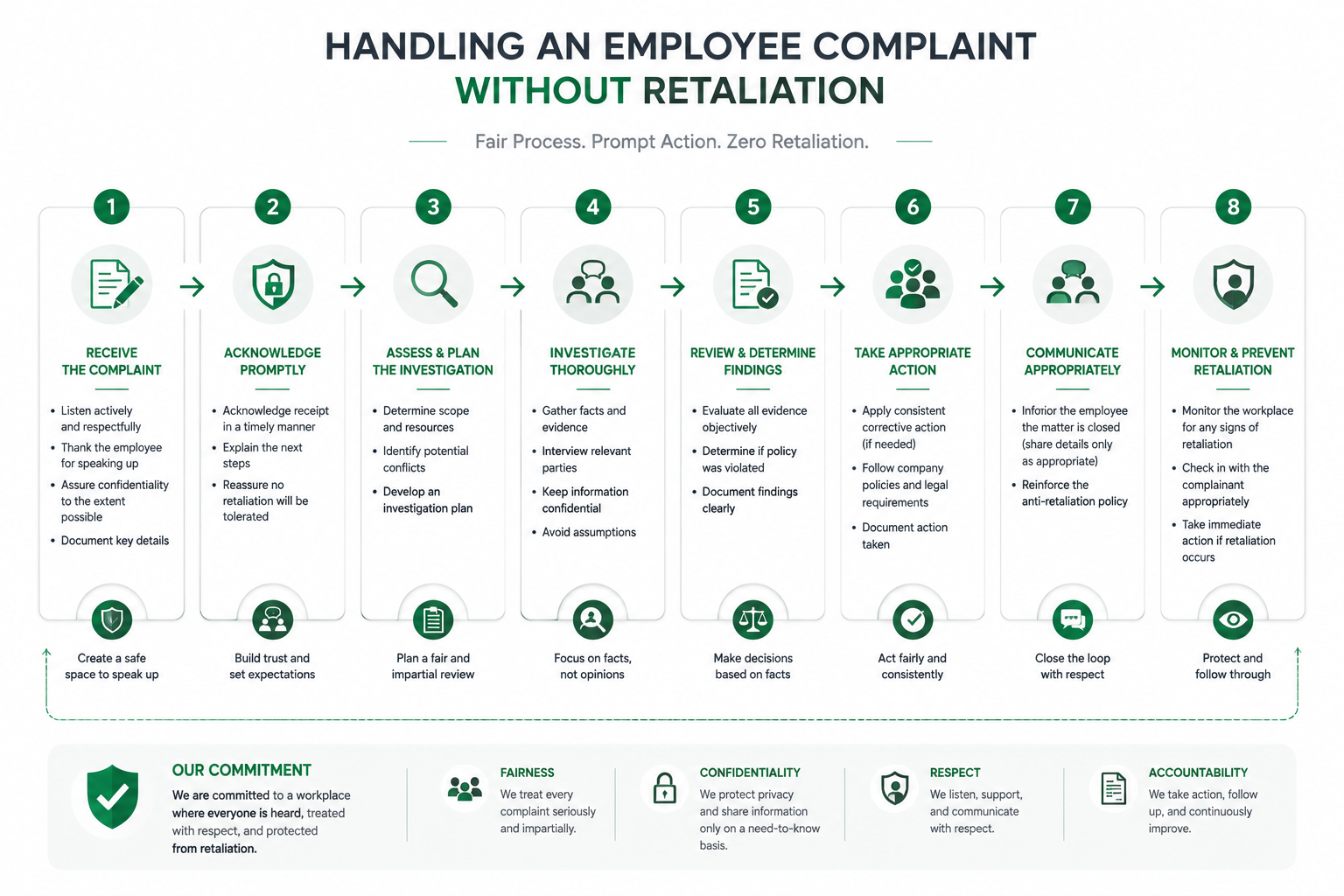
Preventing retaliation claims requires establishing strict boundaries and audit processes within the organization.
Establish a Strong Anti-Retaliation Policy: Ensure your employee handbook clearly defines retaliation and states that the company will not tolerate adverse actions against employees who speak up.
Train Supervisors Regularly: Teach managers that informal comments, schedule shifts, and project assignments are all legally binding and discoverable in court.
Implement Review Processes: Before any manager issues a written warning, shift change, or performance review to an employee who has engaged in protected activity, require a text compliance audit.
[!TIP] Check your communications for retaliation risk.
Avoid subjective comments in performance evaluations. Run a free Retaliation Check scan to review your manager feedback text in under 60 seconds, ensuring it meets federal compliance standards.
Frequently Asked Questions
What is the most common form of retaliation at work?
The most common form of retaliation includes negative performance reviews, demotion, termination, or hostiles schedule changes. However, even minor actions like exclusion from team meetings can be considered retaliation if they harm the employee's career.
How does the EEOC prove a workplace retaliation claim?
The EEOC proves retaliation by establishing that the employee engaged in protected activity, suffered an adverse action, and that there is a causal link between the two. Close timing is the most common evidence of this link.
Can minor supervisor actions be considered retaliation?
Yes. Under the Supreme Court standard set in Burlington Northern & Santa Fe Railway Co. v. White, an action is retaliatory if it would deter a reasonable employee from making or supporting a charge of discrimination.
Legal Disclaimer: This article is for informational purposes only and does not constitute formal legal advice. For specific compliance guidance on federal or state employment regulations, consult a qualified employment law attorney.
Share this article
Continue with related compliance resources
Use these scenarios and docs to connect this article to a practical HR review workflow.
Employee Complaint Retaliation Examples
Avoid wording that links workplace complaints to adverse action.
Manager Retaliation Wording
Identify statements that can become evidence of protected-activity retaliation.
Employee Investigation Communication Examples
Keep investigation follow-up neutral, documented, and non-punitive.
Related articles

How to Write a Warning Letter to an Employee (With Compliant Workplace Documentation Examples)
Jun 5, 2026, 9:17 AM

What is a RIF Letter? How to Write a Reduction in Force Notice Without Retaliation Risk
Jun 5, 2026, 9:10 AM

4 Workplace Coaching Examples for Managers (Without Retaliation Risk)
May 31, 2026, 6:12 AM
Put the guide into practice
Check manager wording before it becomes part of the record.
Scan warning letters, leave discussions, coaching notes, and accommodation messages before they are sent.