FMLA Retaliation Examples:
7 Real Court Precedents, Risky Manager Phrases & DOL Rules
Over 50% of federal retaliation lawsuits stem from frontline managers making unscripted remarks or retaliatory performance downgrades when employees take job-protected medical leave. Analyze authentic federal appellate cases, Department of Labor form deadlines (WH-380, WH-381, WH-382), and defense-grade documentation standards.
Median FMLA Verdict
$340,000+
Excluding legal fees
Liquidated Damages
200% (2x)
Mandatory back pay doubling
Temporal Danger Zone
< 90 Days
Pretext inference period
Legal Causation Bar
"Negative Factor"
29 C.F.R. § 825.220(c)
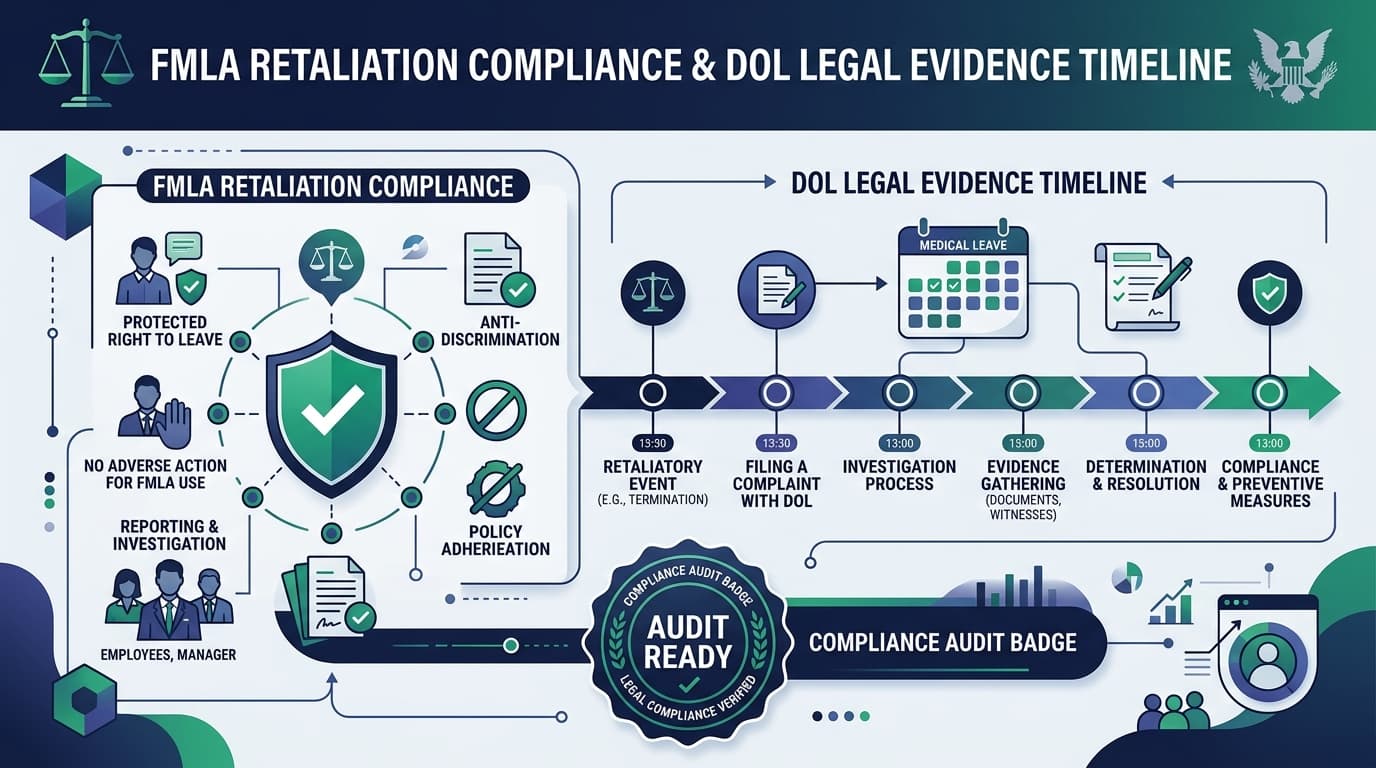
Figure 1.0: Statutory FMLA Anti-Retaliation Evidence Timeline & DOL Form Milestones
Illustrates statutory notice deadlines (5 days), medical verification rights, and critical liability triggers in federal litigation.
Table of Contents & Quick Navigation
What Legally Constitutes FMLA Retaliation? (Statutory Framework)
Under federal law, the Family and Medical Leave Act of 1993 (FMLA) creates two distinct causes of action for aggrieved workers: Interference under 29 U.S.C. § 2615(a)(1) and Retaliation / Discrimination under 29 U.S.C. § 2615(a)(2).
FMLA Interference (§ 2615(a)(1))
Interference occurs when an employer restrains, denies, or chills the exercise of FMLA rights. Crucially, the plaintiff does not need to prove discriminatory intent or malice.
- Failing to provide Form WH-381 within 5 business days
- Directly contacting an employee's physician without permission
- Discouraging an employee from taking entitled leave
- Counting FMLA leave days as attendance occurrences
FMLA Retaliation (§ 2615(a)(2))
Retaliation occurs when an employer takes an adverse action against an employee because they exercised FMLA rights or opposed unlawful leave practices.
- Terminating an employee upon return from medical leave
- Demoting or stripping leadership roles following leave
- Issuing subjective negative performance write-ups
- Using leave as a "negative factor" in promotion decisions
The Dangerous "Negative Factor" Standard: 29 C.F.R. § 825.220(c)
Employers frequently assume they are safe as long as they had "other good business reasons" to fire or write up an employee. In FMLA law, this is a fatal misunderstanding. Under Department of Labor regulation 29 C.F.R. § 825.220(c), an employer may not use the taking of FMLA leave as a negative factorin employment actions, such as hiring, promotions, or disciplinary actions. If protected leave played even a partial role in the manager's frustration or timing, the employer faces strict statutory liability.
7 Real-World Federal FMLA Retaliation Precedents (Verified Legal Case Law)
Every case below represents an authentic, published federal court opinion. These cases demonstrate exactly how supervisors' unvetted statements, rushed disciplinary timelines, and flawed policy enforcement lead to catastrophic corporate liability.
Budhun v. Reading Hospital and Medical Center, 765 F.3d 245 (3d Cir. 2014)
The Fact Pattern:
Sushila Budhun fractured a finger and took FMLA leave. Before her 12 weeks expired, she informed the hospital she could return with light-duty typing restrictions. The hospital claimed typing was an essential function, replaced her, and terminated her when her leave ended without a 100% full-duty clearance.
The Court's Holding:
The 3rd Circuit held Reading Hospital violated the FMLA by failing to provide Form WH-382 Designation Notice detailing fitness-for-duty requirements, and by prematurely replacing her before her full 12-week entitlement expired.
Critical HR Takeaway:
You cannot replace or write up an employee on FMLA leave simply because they cannot return at 100% capacity prior to the exact expiration of their 12-week statutory allotment. Strict adherence to WH-382 notice rules is mandatory.
Jones v. Gulf Coast Health Care of Delaware, LLC, 854 F.3d 1261 (11th Cir. 2017)
The Fact Pattern:
Rodney Jones, activities director at a rehabilitation center, took 12 weeks of FMLA for shoulder surgery. During his leave, he posted photos on Facebook visiting Busch Gardens and amusement parks. The employer fired him immediately upon his return for "FMLA leave fraud" and "conduct unbecoming."
The Court's Holding:
The 11th Circuit reversed summary judgment for the employer. Visiting an amusement park with family did not establish an ability to perform heavy lifting job functions. The immediate termination upon return created an undeniable issue of retaliatory pretext.
Critical HR Takeaway:
Never jump to conclusions based on social media posts. FMLA protects an employee from working their job; it does not mandate house arrest. Investigating FMLA abuse requires independent medical recertification, not emotional manager termination.
Schultz v. Wells Fargo Bank, N.A., 970 F. Supp. 2d 1039 (D. Or. 2013)
The Fact Pattern:
Cynthia Schultz, a bank employee, took intermittent FMLA to manage chronic depression and care for her sick mother. Almost immediately, her supervisor began expressing irritation with coverage gaps, placed her on a rigorous Performance Improvement Plan (PIP), and fired her for failing quotas.
The Court's Holding:
The court held that placing an employee on a PIP and maintaining identical unadjusted sales quotas while the employee is working reduced hours under intermittent FMLA establishes clear evidence of unlawful retaliation and interference.
Critical HR Takeaway:
Production quotas and performance goals must be proportionally prorated for time taken on approved intermittent FMLA leave. Holding an employee to 100% production on 80% work hours is illegal retaliation.
Egan v. Delaware River Port Authority, 851 F.3d 263 (3d Cir. 2017)
The Fact Pattern:
An employee took intermittent FMLA for severe back injuries. His supervisor openly complained about having to adjust project schedules. During an organizational restructuring, the employee was terminated, and the employer claimed it was purely an economic layoff.
The Court's Holding:
The 3rd Circuit formally affirmed that FMLA retaliation claims can be brought under a "mixed-motive" jury instruction. The employee only has to prove that taking FMLA was a "negative factor" in the discharge, not the sole cause.
Critical HR Takeaway:
An employer cannot win an FMLA retaliation lawsuit simply by proving the employee had genuine performance issues. If the supervisor's notes or emails mention FMLA disruption, the case goes directly to a jury.
Bryant v. Dollar General Corp., 538 F.3d 394 (6th Cir. 2008)
The Fact Pattern:
Martha Bryant requested FMLA leave for emergency medical treatments. Her supervisor verbally reprimanded her, stating she should never have requested leave during peak retail season, and terminated her shortly after on pretextual misconduct grounds.
The Court's Holding:
The 6th Circuit affirmed a full jury verdict awarding $73,942.68 in back pay, plus mandatory statutory liquidated damages (doubling the award), and attorney's fees. The court confirmed anti-retaliation protections attach the moment leave is requested.
Critical HR Takeaway:
Supervisor verbal outbursts regarding the timing or inconvenience of an FMLA leave request are direct smoking-gun evidence that eliminates any good-faith defense, guaranteeing mandatory double damages.
DeLuca v. City of Philadelphia, Civil Action No. 11-4028 (E.D. Pa.)
The Fact Pattern:
An employee taking intermittent FMLA was issued progressive disciplinary warnings under the employer's standard "no-fault" attendance point system. HR failed to manually isolate certified FMLA days from general unexcused absences.
The Court's Holding:
Assessing any points, occurrences, or negative performance deductions for FMLA-protected absences violates federal law per se under 29 C.F.R. § 825.220(c). The court rejected the employer's defense that the automated system treated everyone equally.
Critical HR Takeaway:
Automated attendance point tracking systems in HRIS (like Workday, UKG, ADP) must feature strict FMLA exclusion protocols. Blindly applying a no-fault attendance policy to protected leave is an automatic loss in court.
Gordon v. U.S. Capitol Police, 778 F.3d 158 (D.C. Cir. 2015)
The Fact Pattern:
An employee requested intermittent FMLA leave for chronic depression. A manager warned her during a performance evaluation that taking FMLA would cause supervisors to view her as unreliable, severely damaging her chances for promotion.
The Court's Holding:
The D.C. Circuit ruled that pre-emptive verbal threats that leave will harm an employee's career constitute actionable retaliation and interference, even before any formal promotion denial or termination takes place.
Critical HR Takeaway:
Managers must never "coach" employees on how taking leave will look to executive leadership. Telling an employee that leave signals a lack of commitment is independent statutory retaliation.
5 Common Patterns of Workplace FMLA Retaliation
Retaliation rarely arrives with a confession letter stating "you are being fired for taking FMLA." Instead, plaintiff attorneys and EEOC investigators look for consistent operational patterns that mask unlawful intent:
1. Temporal Proximity Termination
Terminating an employee or initiating disciplinary action within 1 to 90 days of an FMLA request or return. In many circuits, temporal proximity of under 30 days is sufficient on its own to establish a prima facie case of retaliation, shifting the burden of proof entirely onto the employer.
2. Weaponized PIPs & Quota Traps
Placing an employee on a Performance Improvement Plan (PIP) immediately upon return, or maintaining 100% monthly sales/production quotas when the employee took 3 weeks of approved leave. This creates an impossible mathematical hurdle designed to manufacture paper pretext.
3. Intermittent Schedule Demotions
Reassigning an employee from a prestigious day shift or client-facing account to an undesirable graveyard shift, remote desk, or dead-end administrative task under the guise of "accommodating unpredictable scheduling."
4. Bonus Forfeitures & Points
Denying annual attendance bonuses or safety awards solely because of FMLA leave. Under 29 C.F.R. § 825.215(c)(2), if an employer pays bonuses to employees who take non-FMLA leaves (like paid vacation), denying the bonus to FMLA users constitutes explicit retaliation.
How DOL FMLA Forms (WH-380/381/382) Become Evidence in Retaliation Claims
In federal employment litigation, the paper trail of official Department of Labor forms (valid through 2026 revisions) is scrutinized line-by-line. Employers regularly lose summary judgment motions not because of malicious intent, but because HR missed strict statutory notice deadlines:
| DOL Form Number | Form Purpose | Mandatory Statutory Deadline | Retaliation Litigation Exposure |
|---|---|---|---|
| Form WH-381 | Notice of Eligibility & Rights | 5 Business Days of employee notice | Failure to provide within 5 days is prima facie interference; employer cannot discipline employee for unapproved absences during delay. |
| Form WH-380-E / F | Medical Certification (Self / Family) | Must give employee at least 15 Calendar Days | Disciplining employee before the 15-day window expires, or failing to grant a 7-day cure period for incomplete forms, creates direct liability. |
| Form WH-382 | Designation Notice | 5 Business Days of complete cert | Failing to specify fitness-for-duty certification requirements on WH-382 strips employer of right to require medical clearance before return. |
| Second / Third Opinion | Medical Certification Challenge | At employer expense (29 C.F.R. § 825.307) | Supervisors cannot contact employee physicians directly. Second opinion doctor cannot be regularly employed or contracted by company. |
Side-by-Side Wording Analysis: 6 Dangerous Phrases vs Defense-Grade Rewrites
In 95% of FMLA retaliation disputes, the plaintiff's core exhibits are supervisor emails, Slack messages, or disciplinary memos where frustration leaked onto the page. Compare how a dangerous comment is transformed into legally defensible documentation:
Risky Supervisor Phrase (Creates Immediate Liability):
"Your intermittent FMLA absences are becoming a huge problem for the team. We are short-staffed and your unpredictability is hurting department morale."
Why it fails in court: Directly connects protected medical leave to blame, operational hardship, and team disruption. This is direct evidence of FMLA interference.
Defense-Grade Compliant Rewrite:
"Thank you for submitting your notice. We have recorded those dates under your approved FMLA schedule and are coordinating with department leadership on workflow coverage."
Why it protects the employer: Neutrally logs the dates, acknowledges approvals, and treats coverage as an administrative responsibility, not employee guilt.
Risky Supervisor Phrase (Creates Immediate Liability):
"Since you were gone for 8 weeks, we had to reassign your major accounts to Sarah. You will focus on cold leads until you prove your consistency again."
Why it fails in court: Violates the statutory right under 29 U.S.C. § 2614 to return to an identical or truly equivalent position with identical pay and commission opportunities.
Defense-Grade Compliant Rewrite:
"Welcome back. As outlined in our leave restoration policy, you have returned to your Senior Account Executive role with equivalent commission potential, account values, and support resources."
Why it protects the employer: Formally affirms equivalent status and commission rights, preventing constructive demotion claims.
Risky Supervisor Phrase (Creates Immediate Liability):
"It seems very convenient that your chronic migraines always flare up on Fridays and Mondays. If you take next Friday off, I will consider it unexcused."
Why it fails in court:Threatening to declare certified leave "unexcused" without following statutory recertification protocols under 29 C.F.R. § 825.308 is direct retaliation.
Defense-Grade Compliant Rewrite:
"We are processing your absence under your intermittent leave file. HR will review our standard leave tracking and determine whether updated medical recertification is appropriate at this interval."
Why it protects the employer: Routes pattern verification to HR, which can lawfully request recertification under DOL pattern-of-absence rules (29 C.F.R. § 825.308(c)(2)).
Pre-Discipline FMLA Retaliation Scrub Checklist (6-Point Audit)
Before issuing a written warning, PIP, or termination to any employee who has requested or taken FMLA leave in the preceding 6 months, HR must complete this 6-point evidentiary audit:
Pre-Leave Performance Baseline Verification
Did the documented performance issue exist before the employee requested FMLA leave? If an employee had glowing reviews for 3 years, and suddenly receives their first negative evaluation after taking leave, courts treat this as compelling evidence of pretext.
Mathematical Quota & Target Proration
Were sales quotas, billable hour requirements, and production targets proportionally reduced to reflect the exact number of hours or days the employee was out on approved leave? Failing to prorate targets is per se FMLA interference.
Strict Comparator Parity Analysis
Have non-FMLA employees who committed identical performance or conduct errors received the exact same level of discipline? If a non-protected peer was given a verbal warning for tardiness while an FMLA employee was given a final write-up, retaliation is presumed.
Linguistic Wording Scrub (Zero Leave References)
Ensure the written warning or memo contains zero references to "availability," "reliability," "morale," "coverage," or "medical appointments." Ground the documentation 100% in observable, non-protected operational deliverables.
DOL Form Timing & Notice Verification
Confirm that HR delivered Forms WH-381 and WH-382 within the mandatory 5-business-day windows, and that all medical certifications were handled strictly in compliance with 29 C.F.R. § 825.305.
Independent Decision-Maker Review
To defeat the "Cat's Paw" theory of liability (where a biased supervisor influences an unbiased decision-maker), an independent HR director or executive who was not subject to operational scheduling stress must review and approve the final action.
Frequently Asked Questions (FAQ) About FMLA Retaliation
What is the statute of limitations for filing an FMLA retaliation lawsuit?
Under 29 U.S.C. § 2617(c), the standard statute of limitations for an FMLA violation is two years from the date of the last event constituting the alleged violation. However, if the employer's violation was willful (meaning the employer knew or showed reckless disregard for whether its conduct violated the FMLA), the statute of limitations extends to three years. Furthermore, unlike Title VII claims, plaintiffs are NOT required to exhaust administrative remedies with the EEOC before filing an FMLA lawsuit in federal court.
Can individual managers be held personally liable for FMLA retaliation?
Yes. Unlike Title VII or the ADA in most jurisdictions, the FMLA defines an "employer" to include "any person who acts, directly or indirectly, in the interest of an employer to any of the employees of such employer" (29 U.S.C. § 2611(4)(A)(ii)(I)). In the majority of federal circuits (including the 2nd, 3rd, 5th, and 11th Circuits), supervisors and HR managers who exercise operational control over the decision to discipline or terminate an employee can be named as individual defendants and held personally liable for back pay and liquidated damages.
Can an employer deny an annual attendance or safety bonus because of FMLA leave?
It depends on the company's treatment of other leave types. Under 29 C.F.R. § 825.215(c)(2), if a bonus is based on achieving a specific goal (such as perfect attendance or safety milestone) and the employee does not achieve it due to FMLA leave, the bonus may only be denied if employees on other non-FMLA leaves (such as paid personal leave or vacation) are also denied the bonus. If other leaves are excused for bonus calculations but FMLA is penalized, it is unlawful discrimination.
What happens when an employee's 12 weeks of FMLA expire but they still cannot return?
When 12 weeks of FMLA expire, automatic termination triggers immediate Americans with Disabilities Act (ADA) liability. The EEOC explicitly maintains that additional unpaid medical leave or reassignment to a vacant position may constitute a reasonable accommodation under the ADA. Employers must initiate an interactive dialogue prior to any separation. Review our full FMLA to ADA Transition Guide & Exhaustion Protocol for detailed compliance workflows.
How does RetaliationCheck scan and prevent FMLA retaliation wording?
RetaliationCheck is purpose-built to audit supervisor communication before messages are sent. Our linguistic engine detects statutory retaliation triggers—such as temporal leave references, morale guilt-tripping, unprorated quotas, and subjective "attitude" critiques. The tool instantly flags hazardous text and generates defense-grade rewrites grounded in EEOC and DOL labor standards.
Never Let an Emotional Supervisor Draft a $300,000 FMLA Lawsuit.
Paste any warning letter, performance review, or employee email into RetaliationCheck. Our AI legal engine identifies temporal retaliation traps, prorates attendance expectations, and outputs defense-grade alternative wording in under 5 seconds.
✓ Free scan requires no credit card • SOC-2 compliant data privacy • No model training on your data